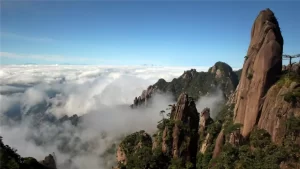
Nestled in the northeastern part of Jiangxi Province, China, Sanqing Mountain is a UNESCO World Heritage Site renowned for its stunning granite peaks, rich Taoist heritage, and breathtaking landscapes. Whether you’re an adventure seeker, a spiritual traveler, or a nature lover, Sanqing Mountain offers a unique and unforgettable experience. This guide covers essential information, how to get there, the best things to do, accommodation options, and more.
Essential Information
- Location: Sanqing Mountain is located in Shangrao City, Jiangxi Province, approximately 80 kilometers (50 miles) from Yushan County.
- Altitude: The highest peak, Yujing Peak, stands at 1,819 meters (5,968 feet) above sea level.
- Best Time to Visit: The best time to visit is from March to November, with spring and autumn offering the most pleasant weather. Winter visits are possible but can be very cold.
- Currency: Chinese Yuan (CNY). Credit cards are accepted in some areas, but mobile payments (WeChat Pay, Alipay) and cash are more commonly used.
- Language: Mandarin is the official language. English is not widely spoken, so basic Mandarin phrases or a translation app can be helpful.
Interesting Facts About Sanqing Mountain
- Taoist Influence: Sanqing Mountain is one of China’s most sacred Taoist mountains, named after the “Three Pure Ones” of Taoism.
- UNESCO World Heritage Site: Recognized in 2008 for its outstanding natural beauty and cultural significance.
- Granite Formations: The mountain features striking rock formations, many of which resemble human and animal figures.
- Sea of Clouds: Due to its high altitude, Sanqing Mountain is famous for its mesmerizing cloud formations, creating a dreamlike atmosphere.
How to Get There
With Train:
- Take a high-speed train to Shangrao Railway Station or Yushan Railway Station. From there, buses and taxis are available to reach the scenic area.
By Plane:
- The nearest airport is Shangrao Sanqingshan Airport (about 1.5 hours by car). Alternatively, you can fly into Nanchang Changbei International Airport and take a train or bus to Shangrao.
By Bus:
- Long-distance buses from major cities in Jiangxi and neighboring provinces offer direct routes to the Sanqing Mountain visitor center.
Best Things to Do in Sanqing Mountain
Explore the Scenic Spots
- Yujing Peak: The highest point of the mountain, offering panoramic views of the surrounding landscapes.
- Sunrise Watching: Catch a breathtaking sunrise from Nanqing Garden or West Coast Scenic Area.
- Sea of Clouds: Visit in the early morning or after rainfall to witness the mesmerizing cloud formations.
Visit the Historical and Cultural Sites
- Sanqing Palace: A historic Taoist temple complex that reflects the mountain’s deep spiritual significance.
- Tianmen Gate: A natural rock archway often shrouded in mist, adding to the mystical ambiance.
- Ancient Taoist Sites: Numerous shrines and inscriptions can be found throughout the mountain.
Outdoor Activities
- Hiking and Trekking: Well-maintained trails allow visitors to explore the mountain’s peaks and valleys.
- Photography: Unique rock formations and cloud-covered peaks make this a paradise for photographers.
- Wildlife Watching: The mountain is home to diverse flora and fauna, including rare plant species and monkeys.
Best Accommodation Options
- Sanqing Mountain Jinsha Hotel: A luxury hotel offering comfortable accommodations and mountain views.
- Sanqingshan International Resort: A mid-range option with modern facilities and easy access to the scenic area.
- Yunhai Guesthouse: A budget-friendly guesthouse ideal for backpackers and nature lovers.
- Mountain Lodges: Several simple lodges are available for those wanting to stay closer to nature.
Cultural and Modern Attractions
- Local Tea Culture: Sanqing Mountain is known for its high-quality green tea, which visitors can sample and purchase.
- Calligraphy and Stone Inscriptions: Ancient Taoist inscriptions and calligraphy are found on rock surfaces throughout the area.
- Handicrafts and Souvenirs: Purchase traditional Taoist charms, jade carvings, and local artwork.
Dining and Nightlife
While nightlife is limited due to the mountain’s natural setting, there are several great dining options:
- Taoist Vegetarian Restaurants: Enjoy healthy and delicious vegetarian meals inspired by Taoist dietary principles.
- Local Cuisine: Try regional specialties such as rice noodles, wild mushroom soup, and braised bamboo shoots.
- Tea Houses: Experience traditional Chinese tea culture at one of the scenic tea houses.
Day Trips from Sanqing Mountain
- Wuyuan: A picturesque county famous for its well-preserved ancient villages and stunning rapeseed flower fields.
- Longhu Mountain (Dragon and Tiger Mountain): Another sacred Taoist site with beautiful landscapes and rock carvings.
- Shangrao City: Explore the local markets, historical sites, and cultural attractions.
Getting Around
- Walking: Many attractions can be reached on foot via well-maintained hiking paths.
- Cable Cars: Several cable cars are available for visitors who prefer to avoid steep hikes.
- Shuttle Buses: Operate within the scenic area, making it easier to reach key sites.
Practical Tips
- Altitude: While not extremely high, some visitors may experience mild altitude discomfort. Take breaks if needed.
- Weather: The mountain can be misty and cool, even in summer, so bring layers.
- Entrance Fees: There is an admission fee to enter Sanqing Mountain, with additional fees for cable cars.
- Mobile Payments: WeChat Pay and Alipay are widely used, but it’s recommended to carry some cash.
- Safety: Stick to designated trails when hiking, as the terrain can be steep and slippery.
Conclusion
Sanqing Mountain is a spectacular blend of natural beauty, Taoist heritage, and serene landscapes. Whether you’re hiking through misty peaks, exploring ancient temples, or simply admiring the breathtaking views, a visit to Sanqing Mountain promises a deeply enriching experience. Plan your trip well, embrace the mountain’s tranquil atmosphere, and immerse yourself in the wonders of this sacred destination.