
Everything You Need To Know For Norway
Geographical Position And Climate Of Norway
Norway is located in Northern Europe, occupying the western portion of the Scandinavian Peninsula. It extends northward from the North Sea along the Norwegian Sea, bordering Sweden to the east, Finland to the northeast, and Russia to the far northeast.
Norway’s climate varies greatly across its vast geography. Despite its high latitude, its climate is moderated by the Gulf Stream, especially along the coast. The climate is also influenced by Norway’s high latitude, where the northernmost parts experience polar nights in winter and midnight sun in summer.
Brief History Of Norway
Norway has a rich history that dates back to the Viking Age, when it emerged as a distinct kingdom. During the 9th to 11th centuries, Norwegian Vikings explored, raided, and traded across Europe. In 872, Harald Fairhair unified the country, becoming its first king.
The Middle Ages saw Norway flourish, but by the 14th century, the country entered into a union with Denmark. This period, known as the Kalmar Union, lasted until 1814, after which Norway entered a union with Sweden.
Norway gained full independence in 1905, establishing its own monarchy with the election of King Haakon VII. Throughout the 20th century, Norway remained neutral during World War I, but was occupied by Nazi Germany during World War II.
Post-war Norway experienced rapid economic growth, largely due to the discovery of oil in the North Sea in the late 1960s. Today, Norway is known for its high standard of living, welfare system, and as a founding member of NATO and the United Nations.
Religion
The dominant religion in Norway is Christianity. There are Muslim, Buddhist, Hindu and Jewish minorities.
Language
Norwegian is the country’s official language. Other widely spoken languages are Danish, Swedish and English.
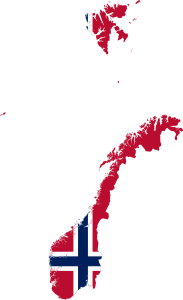
Norway is a prime destination for tourists seeking natural beauty, outdoor activities, and cultural experiences. Its dramatic landscapes include deep fjords, towering mountains, and expansive forests, making it perfect for hiking, skiing, and wildlife watching. The Northern Lights and the Midnight Sun are major draws in the Arctic Circle.
Cities like Oslo, Bergen, and Tromsø offer historical sites, museums, and vibrant culinary scenes. Norwegian coastal cruises along the fjords and the scenic railways provide breathtaking views of the countryside. With its rich Viking history and traditional Sami culture, Norway offers a unique blend of attractions for travelers.
Places You Must Visit In Norway
- Oslo
- Bergen
- Bodø
- Fredrikstad
- Tromsø
- Svalbard
- Jostedalsbreen National Park
- Lillehammer
- Preikestolen
- Vøringsfossen
- Mardalsfossen
- Hardanger Fjord
Before You Visit Norway
Travel to Norway
- By Air: The main international gateway is Oslo Airport (Gardermoen), with other major airports in Bergen, Stavanger, Tromsø, and Trondheim offering international flights.
- By Train: There are connections from Sweden to Oslo and other Norwegian cities. The train journey offers scenic views, especially from the Swedish border to Oslo.
- By Road: You can drive into Norway from Sweden, Finland, or Russia. The roads are well-maintained, and the scenery is stunning, particularly along the Norwegian Scenic Routes.
- By Ferry: Ferries run between Norway and Denmark, Germany, and Sweden. They accommodate both passengers and vehicles, providing a leisurely way to arrive.
- By Cruise Ship: Norway is a popular cruise destination, with ships docking at various ports along the coast, especially near the fjords and in the Arctic Circle.
Visas for Norway
Norway is part of the Schengen Area, which means that travelers from Schengen countries can enter without a visa for short stays. For non-Schengen area citizens, the following applies:
- Visa-Free: Nationals from visa-exempt countries can stay in Norway and the Schengen area for up to 90 days within a 180-day period without a visa.
- Schengen Visa: Travelers from countries that are not visa-exempt need to apply for a Schengen visa, which allows travel within the Schengen Area for up to 90 days.
- Work, Study, and Other Long-Term Visas: For stays longer than 90 days, such as work or study, you must apply for a residence permit relevant to the purpose of your stay.
Best time to visit Norway
The best time to visit Norway depends on what you want to experience:
- Summer (June to August): Ideal for hiking, cycling, and fjord cruises. Long days and the Midnight Sun in the north provide ample daylight for activities.
- Winter (December to February): Perfect for skiing, snowboarding, and experiencing the Northern Lights, especially above the Arctic Circle.
- Spring (May to early June): A great time to see the melting snow, blooming flowers, and fewer tourists.
- Autumn (September to October): Offers beautiful fall foliage and is a good time for sightseeing with fewer crowds.
Each season offers a unique charm, so the best time to visit would align with the experiences you seek.
Important Information
Capital – Oslo
Territory – 385,207 km2
Currency – Norwegian krone
Time zone – UTC+1 (CET) / UTC+2 (CEST)
Population – 5,550,203
Demonym – Norwegian