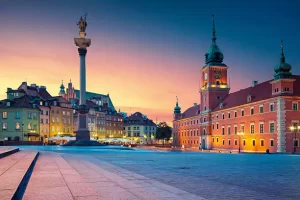
Warsaw, the vibrant capital of Poland, blends a rich history with modern energy. Known for its resilient spirit, it offers fascinating museums, historic architecture, lush parks, and a dynamic cultural scene. Whether you’re a history buff, foodie, or art lover, Warsaw promises something for everyone.
Essential Information
- Location: Central Poland, straddling the Vistula River.
- Language: Polish (English is widely understood in tourist areas).
- Currency: Polish Zloty (PLN).
- Best Time to Visit:
- Spring (April–June): Mild weather and blooming parks.
- Autumn (September–October): Vibrant foliage and pleasant temperatures.
- Winter: Christmas markets and cozy atmospheres.
- Time Zone: Central European Time (CET).
Interesting Facts
- Rebuilt Glory: Warsaw was nearly destroyed during WWII, but its Old Town was meticulously reconstructed and is now a UNESCO World Heritage Site.
- Home to Chopin: Composer Fryderyk Chopin spent his formative years here; the city celebrates him with monuments, concerts, and museums.
- Vistula River: Warsaw is one of Europe’s few capitals with wild, undeveloped riverbanks, perfect for relaxation and outdoor activities.
- Green City: Parks cover nearly a quarter of the city, with Łazienki Park being the crown jewel.
How to Get There
By Air
- Warsaw Chopin Airport (WAW): The main international airport, 10 km from the city center.
- Modlin Airport (WMI): Serves budget airlines, 40 km from Warsaw.
By Train
- Warsaw Central Station (Warszawa Centralna): A major hub with connections to other Polish cities and Europe.
With Bus
- International and domestic buses arrive at the Warsaw West Bus Station (Dworzec Zachodni).
By Car
- Poland’s highway network makes it convenient to drive to Warsaw from neighboring countries.
Best Things to Do
1. Explore the Old Town
- Walk along cobblestone streets, admire the colorful townhouses, and visit Castle Square and the Royal Castle.
2. Discover Łazienki Park
- Stroll through this expansive park, home to the Palace on the Isle, a Chopin monument, and free Sunday piano concerts in summer.
3. Visit the Warsaw Uprising Museum
- A moving tribute to the city’s WWII resistance efforts.
4. Admire the Palace of Culture and Science
- An iconic skyscraper offering panoramic views of the city.
5. Wander along the Vistula Boulevards
- Enjoy riverside cafes, biking trails, and outdoor events.
Best Accommodation Options
Luxury
- Raffles Europejski Warsaw: A historic hotel combining elegance with modern amenities.
- Hotel Bristol: An opulent stay near the Presidential Palace and Old Town.
Mid-Range
- PURO Hotel Warsaw Centrum: A stylish option with excellent service and amenities.
- Novotel Warszawa Centrum: Centrally located with comfortable rooms.
Budget
- Oki Doki Old Town Hostel: Affordable and close to key attractions.
- Tatamka Hostel: A cozy option near the Warsaw Uprising Museum.
Cultural and Modern Attractions
Cultural
- POLIN Museum of the History of Polish Jews: A world-class museum tracing Jewish history in Poland.
- Fryderyk Chopin Museum: A multimedia journey through the life of Poland’s famous composer.
- Wilanów Palace: Known as the “Polish Versailles,” this baroque palace is a testament to royal grandeur.
Modern
- Neon Museum: A quirky museum showcasing Warsaw’s neon sign legacy from the communist era.
- Praga District: A hip area with street art, galleries, and trendy cafes.
Dining and Nightlife
Dining
- Traditional Polish Cuisine: Try pierogi (dumplings), żurek (sour rye soup), and bigos (hunter’s stew).
- Restaurant Recommendation: Stary Dom for authentic flavors.
- Modern Eateries: MOD serves fusion dishes, and Charlotte Menora is perfect for brunch.
Nightlife
- Pavilions at Nowy Świat: A hub for trendy bars and casual drinks.
- Vistula River Bars: Open-air bars like BarKa offer a unique vibe.
- Clubs: Level 27 and Smolna are top spots for dancing.
Day Trips
- Kampinos National Park: A UNESCO Biosphere Reserve just outside the city, ideal for hiking and nature enthusiasts.
- Żelazowa Wola: The birthplace of Chopin, located 50 km from Warsaw.
- Kazimierz Dolny: A picturesque town on the Vistula River, perfect for art and history lovers.
Getting Around
- Public Transport: An efficient network of buses, trams, and two metro lines. Use the Jakdojade app for route planning.
- Bikes: Rent a bike from the city’s Veturilo system to explore at your own pace.
- Taxis/Ride-Sharing: Uber and Bolt operate throughout the city.
- Walking: Many attractions are within walking distance in the city center.
Practical Tips
- Currency Exchange: Use reputable exchange points or ATMs for the best rates.
- Language: Learn a few basic Polish phrases; locals appreciate the effort.
- Tipping: 10% is customary in restaurants if service is good.
- Safety: Warsaw is safe, but always be cautious of pickpockets in tourist areas.
- Public Transport Tickets: Buy tickets at kiosks or machines and validate them on board.
Conclusion
Warsaw, Poland’s dynamic capital, offers a captivating blend of history, culture, and modernity. From the reconstructed charm of the Old Town to cutting-edge attractions in the Praga District, the city invites visitors to uncover its stories. Whether you’re enjoying traditional pierogi, exploring world-class museums, or soaking in the riverside ambiance, Warsaw promises unforgettable experiences.