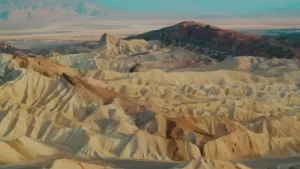
Death Valley National Park is a land of extremes, offering a surreal and captivating landscape of rolling sand dunes, vast salt flats, colorful canyons, and towering peaks. Known as one of the hottest and driest places on Earth, it provides an unforgettable desert experience.
Essential Information
- Location: Eastern California, near the Nevada border.
- Established: 1933, designated as a national park in 1994.
- Famous For: The lowest point in North America, vast salt flats, and unique geological features.
- Entry Fee: $30 per vehicle (valid for 7 days).
- Best Time to Visit:
- Fall (October–November) and Spring (March–May): Mild temperatures and blooming wildflowers in spring.
- Winter (December–February): Cooler weather, ideal for hiking.
- Summer (June–September): Extreme heat; explore with caution.
Interesting Facts
- Lowest Point in North America: Badwater Basin sits 282 feet below sea level.
- Extreme Temperatures: Holds the world record for the highest air temperature: 134°F (57°C) in 1913.
- Starry Skies: Designated as a Gold-Tier International Dark Sky Park.
- Rare Rainfall: Occasional rains can lead to stunning “super blooms” of wildflowers.
- Rich History: The park was home to the Timbisha Shoshone Tribe and later saw a gold rush boom in the 19th century.
How to Get There
- By Air:
- Closest airports: Las Vegas McCarran International Airport (LAS) (2 hours away) or Los Angeles International Airport (LAX) (4 hours away).
- By Car:
- From Las Vegas: Drive 120 miles west via NV-160 and CA-190.
- From Los Angeles: Drive about 230 miles north via I-15 and CA-190.
Best Things to Do
- Explore Badwater Basin:
- Walk across the vast salt flats at the lowest point in North America.
- Hike Golden Canyon to Red Cathedral:
- A picturesque trail with golden-hued walls leading to a dramatic cathedral-like rock formation.
- Visit Zabriskie Point:
- A panoramic viewpoint offering sunrise and sunset vistas over the eroded badlands.
- See Artist’s Palette:
- A colorful array of rocks on Artist’s Drive, caused by mineral oxidation.
- Climb Mesquite Flat Sand Dunes:
- Perfect for photography, especially during sunrise or sunset.
- Take in Dante’s View:
- A high-altitude viewpoint providing sweeping views of the valley floor and the distant mountains.
- Visit Scotty’s Castle (when open):
- A historic 1920s mansion in the northern part of the park.
- Stargazing:
- With minimal light pollution, the night sky offers a breathtaking view of stars and constellations.
Best Accommodation
- The Inn at Death Valley:
- A luxury hotel offering stunning views and upscale amenities.
- The Ranch at Death Valley:
- Family-friendly resort with comfortable accommodations and a relaxing pool.
- Panamint Springs Resort:
- A budget-friendly option with cabins and RV spots.
- Stovepipe Wells Village:
- Offers rustic charm and proximity to key park attractions.
- Campgrounds:
- Popular sites include Furnace Creek Campground (reservations recommended) and Mesquite Spring Campground.
Good Attractions
- Ubehebe Crater: Explore this massive volcanic crater near the park’s northern edge.
- Devil’s Golf Course: A jagged salt formation with surreal textures.
- Mosaic Canyon: A slot canyon with smooth, marble-like walls.
- Wildrose Charcoal Kilns: Historical beehive-shaped structures used for producing charcoal in the late 1800s.
- Racetrack Playa: Famous for its mysterious moving rocks, though it requires a high-clearance vehicle to visit.
Getting Around
- By Car:
- A personal vehicle is essential, as there is no public transport within the park.
- 4WD or High-Clearance Vehicles:
- Needed for remote areas like Racetrack Playa or Titus Canyon.
- Biking:
- Allowed on park roads but requires caution due to heat and long distances.
Day Trips
- Ash Meadows National Wildlife Refuge:
- Located near the park, this wetland sanctuary is a stark contrast to the desert.
- Rhyolite Ghost Town:
- Explore the remnants of this historic mining town.
- Alabama Hills:
- About 3 hours away, these striking rock formations are a Hollywood favorite.
Practical Tips
- Stay Hydrated: Bring plenty of water and drink regularly, even in cooler months.
- Prepare for Heat: Wear sunscreen, a wide-brimmed hat, and light clothing.
- Watch for Wildlife: Be cautious of snakes and avoid feeding any animals.
- Fuel Up: Gas stations are limited; fill up before entering the park.
- Respect the Environment: Stay on trails and avoid damaging delicate formations.
- Check Weather Conditions: Flash floods can occur during rare rains.
Conclusion
Death Valley National Park is a place of striking contrasts and breathtaking beauty. From its towering dunes and colorful canyons to its star-studded skies, this park offers an unforgettable journey into one of nature’s most extraordinary landscapes. Whether you’re hiking, sightseeing, or soaking up the solitude, Death Valley is sure to leave a lasting impression. Pack wisely, plan ahead, and get ready for an adventure like no other!