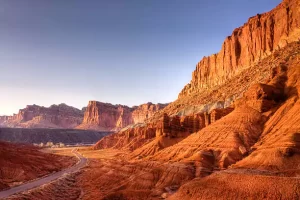
Located in the heart of southern Utah, Capitol Reef National Park is one of the lesser-known but equally stunning gems of the American Southwest. Known for its striking rock formations, historic sites, and rich cultural heritage. Capitol Reef offers a unique blend of natural beauty and outdoor adventure. Whether you’re looking to hike through rugged canyons, explore ancient petroglyphs, or simply enjoy breathtaking views, Capitol Reef National Park is a must-visit destination.
Essential Information About Capitol Reef National Park
- Location: Capitol Reef National Park is located in central Utah, approximately 8 miles west of the small town of Torrey, and spans over 241,000 acres.
- Climate: The park experiences a semi-arid climate, with hot summers and mild winters. Summer temperatures can exceed 90°F (32°C), while winter temperatures typically range from 30°F to 50°F (1°C to 10°C).
- Best Time to Visit: The best times to visit Capitol Reef are in the spring (April to May) and fall (September to October) when temperatures are more moderate. The park is less crowded during these times, allowing for a more peaceful experience. Summer can be very hot, while winter offers fewer visitors but colder temperatures.
Interesting Facts About Capitol Reef National Park
- Named for Its Unique Geology: Capitol Reef’s name is derived from the white domes of Navajo Sandstone, which resemble the domed capitol buildings in Washington, D.C., and the “reef” refers to the rugged cliffs that early pioneers considered a barrier to travel.
- Historic Significance: The park is home to the Fremont Culture petroglyphs, evidence of Native American presence dating back thousands of years. Additionally, the park was a vital part of the early Mormon pioneer settlement in the area.
- The Waterpocket Fold: Capitol Reef is known for the Waterpocket Fold, a massive geological monocline (a steeply sloped fold in the Earth’s crust) that stretches for over 100 miles, creating dramatic cliffs, canyons, and valleys.
- Famous Rock Formations: Some of the park’s famous formations include The Cathedral Valley, Hickman Bridge, The Tanks, and The Golden Throne.
How to Get to Capitol Reef National Park
By Car
The most convenient way to reach Capitol Reef is by car. The park is accessible by U.S. Highway 24 and Utah Highway 12. Main routes include:
- From Salt Lake City: Capitol Reef is about 230 miles (4-5 hours) south of Salt Lake City via Interstate 15 and U.S. Highway 24.
- From Moab: Capitol Reef is approximately 120 miles (2.5 hours) west of Moab via U.S. Highway 191 and U.S. Highway 24.
- From Bryce Canyon: It’s about 120 miles (2-2.5 hours) northeast via Utah Highway 12.
By Air
The nearest commercial airport to Capitol Reef is Salt Lake City International Airport (SLC), about 4.5 hours away by car. For smaller regional flights, the Cedar City Regional Airport (CDC) is an option, located about 2.5 hours away.
By Shuttle or Bus
There are no direct shuttle services to Capitol Reef, but shuttle services operate from nearby towns like Torrey, Moab, and Salt Lake City. Bus services can also be arranged, though public transportation options within the park are limited.
Best Things to Do in Capitol Reef National Park
1. Hike to Hickman Bridge
The Hickman Bridge Trail is a popular 2-mile (3.2 km) round-trip hike that takes visitors to one of Capitol Reef’s most famous natural arches. The hike is relatively easy and offers stunning views of the surrounding rock formations.
2. Explore The Waterpocket Fold
One of the park’s most iconic features is the Waterpocket Fold, which creates dramatic cliffs and deep canyons. You can explore the fold by taking the Scenic Drive, hiking the Capitol Gorge Trail, or visiting the Cathedral Valley for panoramic views.
3. Visit the Historic Fruita District
The Fruita Historic District is home to preserved pioneer-era buildings and the famous Fruita Orchards. You can enjoy a walk through the orchards and even pick fresh fruit during the harvest season (late summer to fall). The Gifford Homestead offers a look into pioneer life, and visitors can purchase handmade goods and pies.
4. Go Stargazing
Capitol Reef is a designated Dark Sky Park, offering unparalleled stargazing opportunities. The clear skies and remote location make it one of the best places to observe constellations, the Milky Way, and meteor showers. Join a ranger-led program for an informative stargazing experience.
5. Drive the Scenic Loop
The Capitol Reef Scenic Drive is a beautiful 7.9-mile (12.7 km) route that takes you through the heart of the park, passing by some of its most iconic features, such as The Castle, The Golden Throne, and The Tanks. For a more adventurous experience, continue along the Cathedral Valley Loop, a more rugged, 58-mile (93 km) gravel road that offers a more remote perspective of the park.
6. Petroglyphs and Pioneer History
Explore the park’s ancient petroglyphs along the Petroglyphs Trail, which showcases rock art from the Fremont culture. Don’t miss the historic Mormon settler sites in the Fruita district, where you can learn about the early settlers who lived in the area.
Best Accommodation Near Capitol Reef National Park
1. In-Park Accommodation
- Capitol Reef National Park Campground: The Capitol Reef Campground is located in the Fruita District and offers both tent and RV sites. It operates on a first-come, first-served basis and fills up quickly during peak season, so be sure to arrive early.
- Gifford Homestead Cabin: For a more rustic experience, stay in one of the historic cabins at the Gifford Homestead.
2. Torrey, Utah
The town of Torrey, just a few miles from the park, offers a range of accommodations, including motels, bed-and-breakfasts, and vacation rentals. Popular options include:
- Red Sands Hotel: A comfortable and affordable option with modern amenities.
- Capitol Reef Resort: A mid-range resort with beautiful views, offering both hotel rooms and more unique accommodations like tipis and conestoga wagons.
- The Capitol Reef Inn & Cafe: A charming and budget-friendly inn with a cozy café serving delicious meals.
3. Camping
For a true outdoor experience, primitive camping is available at various spots along the Scenic Drive and Cathedral Valley for those looking to venture further into the wilderness.
Good Attractions Around Capitol Reef National Park
1. Fishlake National Forest
Located about 45 minutes from the park, Fishlake National Forest is a beautiful area for hiking, fishing, and camping. The Fish Lake Scenic Byway offers a picturesque drive through dense forests and scenic mountain views.
2. The San Rafael Swell
Approximately 1.5 hours to the west, the San Rafael Swell is a massive area of rugged cliffs, canyons, and mesas perfect for hiking, off-roading, and exploring remote rock formations.
3. Bryce Canyon National Park
A 2-hour drive to the east, Bryce Canyon is famous for its unique rock spires called hoodoos. The park offers plenty of hiking opportunities and breathtaking viewpoints.
Getting Around Capitol Reef National Park
- Car: The best way to explore Capitol Reef is by car. The Scenic Drive is the primary route for accessing the park’s main attractions, and the roads are well-maintained.
- Bicycles: The park is bike-friendly, with several paved and dirt roads offering access to trails and viewpoints.
- Hiking: Many of the park’s best attractions can only be reached on foot, so hiking is essential for a true Capitol Reef experience.
Day Trips from Capitol Reef National Park
- Bryce Canyon National Park: About 2 hours to the east, Bryce Canyon is famous for its unique rock formations and stunning viewpoints.
- Canyonlands National Park: 2.5 hours to the southeast, Canyonlands offers expansive desert vistas, hiking, and off-road trails.
- Fishlake National Forest: About 45 minutes away, this area offers hiking, fishing, and beautiful views of the forest and lakes.
Practical Tips for Visiting Capitol Reef National Park
- Bring Water: The desert environment can be hot, especially in summer, so always carry plenty of water with you.
- Dress Appropriately: Wear sturdy hiking boots, especially if you plan to explore the park’s rugged trails.
- Plan Ahead: While Capitol Reef is less crowded than other Utah parks, it’s still a popular destination, especially during spring and fall, so be prepared for limited accommodations.
- Stay on Trails: The park’s natural environment is fragile. Respect the park’s rules, stay on designated trails, and leave no trace of your visit.
Conclusion
Capitol Reef National Park is a stunning yet often overlooked destination, offering unparalleled natural beauty, rich history, and a variety of outdoor activities. Whether you’re hiking to famous rock formations, exploring historic sites, or stargazing under pristine skies, Capitol Reef provides a unique and memorable experience. Don’t miss the opportunity to visit this hidden gem in the heart of Utah’s canyon country!