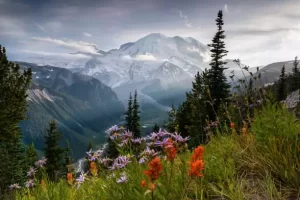
Located in the heart of the Pacific Northwest, Mount Rainier National Park is a stunning destination for nature lovers, outdoor enthusiasts, and adventure seekers. Home to the towering Mount Rainier, one of the tallest volcanoes in the U.S., this park offers spectacular views, hiking trails, and a wealth of natural beauty. Whether you’re hiking through alpine meadows, marveling at glaciers, or simply soaking in the scenery, Mount Rainier provides a world of unforgettable experiences. This comprehensive travel guide will help you navigate your visit to this majestic park.
Essential Information About Mount Rainier
- Location: Mount Rainier National Park is located in central Washington State, about 54 miles southeast of Seattle. The park covers approximately 368 square miles and encompasses the towering Mount Rainier, which rises to 14,411 feet (4,392 meters), making it the highest peak in Washington.
- Climate: The climate in Mount Rainier National Park varies depending on the elevation. At lower elevations, the weather can be mild, especially during the summer months, with highs ranging from 70°F to 80°F (21°C to 27°C). At higher elevations, it can be much cooler, and snow is common in winter. Summer is the most popular time to visit, though the park offers great opportunities for winter sports, especially snowshoeing and skiing.
- Best Time to Visit: The best time to visit Mount Rainier is during the summer (July to September) when the snow has melted, and the wildflowers are in full bloom. If you’re interested in winter sports, December to March offers snowshoeing, skiing, and snowboarding opportunities.
Interesting Facts About Mount Rainier
- Active Volcano: Mount Rainier is an active stratovolcano. While it has not erupted in over 100 years, it remains one of the most closely monitored volcanoes in the U.S.
- Biodiversity: The park boasts incredible biodiversity, with over 300 species of birds, 200 species of animals, and more than 1,000 plant species. It’s a prime destination for wildlife watching, particularly in the summer months.
- Alpine Meadows and Glaciers: Mount Rainier is home to 25 glaciers and numerous alpine meadows that provide stunning vistas and excellent hiking opportunities.
How to Get to Mount Rainier National Park
By Air
The closest major airport is Seattle-Tacoma International Airport (SEA), which is about 2 hours away by car. From the airport, you can drive to the park or take public transportation to nearby towns like Ashford or Enumclaw, where you can then catch shuttle services to the park.
With Car
Mount Rainier National Park is easily accessible by car. You can enter the park through several main entrances:
- Paradise Entrance (via SR 706): This is the most popular entrance and offers direct access to Paradise, the park’s main hub for hiking and scenic views.
- Sunrise Entrance (via SR 410): The Sunrise area offers stunning views of the mountain and a range of hiking trails.
- Mowich Lake (via SR 165): A more remote entrance offering access to hiking and camping opportunities near the lake.
By Public Transit
There are limited public transportation options directly into the park. However, there are shuttle services from nearby towns like Ashford and Enumclaw that provide access to park entrances. Additionally, some tours from Seattle may include transportation to Mount Rainier.
Best Things to Do in Mount Rainier National Park
1. Hiking and Exploring the Trails
Mount Rainier offers over 260 miles of hiking trails for all skill levels. Some of the best hikes include:
- The Skyline Trail (Paradise): A 5.5-mile loop offering breathtaking views of the mountain, glaciers, and wildflower meadows.
- The Wonderland Trail: A challenging 93-mile trail that encircles Mount Rainier, offering a multi-day hike with spectacular scenery.
- Sunrise Rim Trail: A moderate 2.5-mile loop that offers panoramic views of the mountain and surrounding valleys.
2. Visit Paradise
Located at 5,400 feet, Paradise is the most popular area of the park. It’s famous for its wildflower meadows, spectacular views of Mount Rainier, and access to several trails, including the Skyline Trail. In the summer, Paradise is known for being one of the best spots to see wildflowers in bloom.
3. Wildlife Viewing
The park is teeming with wildlife, including black bears, mule deer, mountain goats, and elk. The best time to spot wildlife is early in the morning or at dusk, especially in areas like Paradise, Sunrise, and Reflection Lakes.
4. Glacier Viewing and Climbing
Mount Rainier is home to more than 25 glaciers. Glacier Basin and Emmons Glacier are two great spots for viewing glaciers. If you’re an experienced mountaineer, consider summiting the peak of Mount Rainier with a guided climbing expedition.
5. Snowshoeing and Skiing (Winter Activities)
During the winter months, Mount Rainier is a playground for snow sports. You can go snowshoeing on the Paradise and Longmire trails, or skiing and snowboarding at Crystal Mountain Resort, located just outside the park.
6. Visit Reflection Lakes
These picturesque lakes offer a stunning reflection of Mount Rainier, especially at sunrise and sunset. It’s an ideal spot for photography, picnicking, and enjoying the serene atmosphere.
Best Accommodation Near Mount Rainier
1. National Park Lodging
- Paradise Inn: This historic lodge, located at Paradise, offers cozy rooms with mountain views. It’s the perfect spot for a convenient stay right within the park.
- Longmire Cabins: These rustic cabins, located near the Longmire entrance, provide a more secluded and peaceful accommodation option.
2. Hotels and Inns in Ashford
- Alexander’s Lodge: Located just outside the park, Alexander’s Lodge offers comfortable rooms and a restaurant serving locally sourced meals.
- Whittaker’s Bunkhouse: Located in Ashford, this budget-friendly option offers comfortable bunkhouse-style rooms and easy access to park entrances.
3. Campgrounds
There are several campgrounds within the park, including Cougar Rock Campground (near Paradise) and Ohanapecosh Campground (near the southeast entrance). Camping is a great option for those looking to immerse themselves in nature.
4. Vacation Rentals
For a more private or extended stay, consider booking a vacation rental in nearby towns like Ashford, Elbe, or Packwood. Many cabins and homes are available for rent, providing a comfortable and convenient home base for your adventure.
Good Attractions in Mount Rainier National Park
- Paradise: Known for its wildflower meadows, hiking trails, and panoramic views of Mount Rainier.
- Sunrise: Offers some of the most dramatic views of Mount Rainier and is accessible by car during the summer.
- Reflection Lakes: A serene spot for stunning lake views and photography.
- The Grove of the Patriarchs: A peaceful trail that leads you to ancient trees and is perfect for those who enjoy easy hikes.
- Mowich Lake: A more remote area of the park with options for hiking, camping, and wildlife viewing.
Getting Around Mount Rainier
- Car: A car is the most convenient way to get around the park. Several entrances lead to popular attractions like Paradise, Sunrise, and Longmire. Roads are well-maintained in the summer, but some areas may be inaccessible in winter due to snow.
- Shuttle Services: During peak summer months, shuttle buses may be available from Ashford or other nearby towns to access certain park areas.
- Hiking: Many of the park’s best spots are best explored on foot. Hiking is the primary way to enjoy much of the park’s beauty, with miles of scenic trails.
Day Trips from Mount Rainier
- Seattle: Just 2 hours from the park, Seattle offers urban attractions such as the Space Needle, Pike Place Market, and museums like the Seattle Art Museum.
- Leavenworth: A Bavarian-style village located about 2 hours east, perfect for exploring charming streets, wineries, and hiking.
- Tacoma: Known for its museums, including the Museum of Glass and the Washington State History Museum, Tacoma is a great spot for a cultural day trip.
Practical Tips for Visiting Mount Rainier
- Weather: Be prepared for changing weather conditions, especially at higher elevations. Bring layers, waterproof clothing, and sturdy footwear.
- Pack Food and Water: Services within the park can be limited, especially during off-peak months, so bring your own food, snacks, and plenty of water.
- Park Fees: There is an entrance fee for Mount Rainier National Park, typically around $30 per vehicle for a 7-day pass.
- Wildlife Safety: If you encounter wildlife, maintain a safe distance. Bears and other animals roam freely, and it’s essential to respect their space.
- Cell Service: Cell service can be spotty in the park, so it’s a good idea to download maps or trails ahead of time.
Conclusion
Mount Rainier National Park is a must-visit destination for nature lovers and outdoor enthusiasts. From stunning hikes and alpine meadows to majestic glaciers and wildlife viewing, this park offers endless opportunities for adventure. Whether you’re exploring the iconic Paradise area, summiting the peak, or enjoying winter activities, Mount Rainier provides an unforgettable experience. With its rich biodiversity, diverse ecosystems, and scenic beauty, Mount Rainier is truly one of the crown jewels of the Pacific Northwest. Make sure to plan your trip to this breathtaking national park and immerse yourself in the natural wonders of Washington State.