
Everything You Need To Know For Lithuania
Geographical Position And Climate Of Lithuania
Lithuania is situated in Northern Europe, lying along the southeastern shore of the Baltic Sea, sharing borders with Latvia to the north, Belarus to the east and south, Poland to the south, and Russia’s Kaliningrad Oblast to the southwest.
The climate in Lithuania is transitional, between maritime and continental. The country experiences mild, wet winters and cool summers. Winters can be cold, with temperatures often dropping below freezing, while summers are relatively warm, with average temperatures around 16°C to 17°C (61°F to 63°F), though they can occasionally rise above 30°C (86°F).
Brief History Of Lithuania
Lithuania has a rich and complex history. The first known record of Lithuania as a nation comes from the Quedlinburg Chronicle in 1009. During the Middle Ages, it grew to become one of the largest countries in Europe, encompassing present-day Belarus, Ukraine, and parts of Poland and Russia.
In the 14th century, under the rule of Grand Duke Gediminas and later his grandson Vytautas the Great, the Grand Duchy of Lithuania was at the peak of its power, stretching from the Baltic to the Black Sea. In 1386, the Grand Duchy formed a union with Poland through the marriage of Queen Jadwiga of Poland and Lithuania’s Grand Duke Jogaila, who became King Władysław II Jagiełło of Poland.
The Polish-Lithuanian Commonwealth was created in 1569 by the Union of Lublin, marking a significant era in Lithuanian history with a shared state ruled by a common monarch. However, this period saw the gradual erosion of Lithuanian sovereignty.
The partitions of the Polish-Lithuanian Commonwealth at the end of the 18th century resulted in Lithuania being annexed by the Russian Empire. Despite attempts to regain independence, including the uprisings of 1831 and 1863, Lithuania remained under Russian control until the early 20th century.
Following World War I, Lithuania declared independence on February 16, 1918. Unfortunately, this period of autonomy was short-lived, as the country was occupied by Soviet Russia in 1940, then by Nazi Germany during World War II, and again by the Soviets in 1944.
Lithuania remained a Soviet republic until March 11, 1990, when it became the first Baltic state to declare its independence from the USSR. This move helped spur the dissolution of the Soviet Union. Since regaining its independence, Lithuania has developed a robust democratic system and integrated into Western political and economic structures, joining the European Union and NATO in 2004.
Religion
Christianity is the predominant religion in Lithuania. Roman Catholics are the most numerous, followed by Orthodox Christians and Protestants.
Language
Lithuanian is the country’s official language.
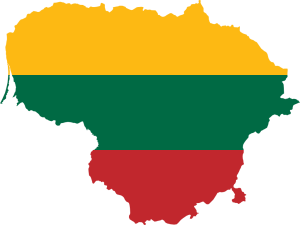
Lithuania, a country rich in history and natural beauty, offers a diverse range of attractions for tourists. From the baroque architecture of its capital city, Vilnius, recognized as a UNESCO World Heritage Site, to the scenic landscapes of its national parks, Lithuania caters to a variety of interests.
Places You Must Visit In Lithuania
Before You Visit Lithuania
Travel to Lithuania
By Air:
The main international gateway to Lithuania is Vilnius Airport (VNO), which is well-connected to major cities across Europe and beyond. Other international airports include Kaunas Airport (KUN) and Palanga Airport (PLQ), serving different regions of the country.
By Land:
- By Bus: There are numerous international bus services that connect Lithuania with neighboring countries such as Poland, Latvia, Belarus, and Russia, as well as other European destinations.
- By Train: While the train network is less extensive, there are direct train services from countries like Belarus and Russia, and connections can be made from Poland and Latvia.
By Car:
Driving to Lithuania is another option, with a good network of roads connecting it to neighboring countries. Ensure you have the necessary documents, such as an International Driving Permit and vehicle registration, and be aware of the local driving laws.
By Sea:
The port city of Klaipėda has ferry connections with Germany and Sweden, offering an alternative route for travelers coming from or through these countries.
Regardless of the mode of transportation, visitors from many countries will need to check visa requirements before traveling to Lithuania. Since Lithuania is part of the Schengen Area, travelers from Schengen countries can enter without border checks, while others may need to apply for a Schengen visa. Always check the latest travel advisories and entry requirements before planning your trip.
Visas for Lithuania
Lithuania is a member of the European Union and part of the Schengen Area. Therefore, the visa requirements for Lithuania are in line with the standard Schengen visa policies.
For Schengen Area Countries:
Citizens of Schengen member states can travel to Lithuania without a visa and can stay for an unlimited period, but must have a valid national ID card or passport.
For EU/EFTA Countries:
Citizens of the European Union (EU) and European Free Trade Association (EFTA) countries do not need a visa to enter Lithuania. They can enter with a valid passport or national ID card and have the right to reside and work in Lithuania.
For Non-EU/Schengen Countries:
Nationals from non-EU/Schengen countries may need to obtain a Schengen visa, which allows them to travel within the Schengen Area for up to 90 days within a 180-day period for tourism, business, or family visits.
Visa-Free Regime:
Citizens of certain countries, such as the United States, Canada, Australia, Japan, South Korea, and others, do not require a visa for short stays (up to 90 days in any 180-day period) for tourism, business, or family visits.
Long-Stay Visas and Residence Permits:
For stays longer than 90 days, such as for work or study, a national D-type visa or a residence permit is required. Applications for these documents must be made at a Lithuanian embassy or consulate in the applicant’s home country or country of legal residence.
Best time to visit Lithuania
The best time to visit Lithuania largely depends on what you want to do and see during your trip. Here’s a seasonal breakdown to help you decide:
Spring (March to May):
Spring is a lovely time to visit. The country awakens from its winter slumber with blooming flowers and gradually warming weather. However, early spring can still be chilly.
Summer (June to August):
Summer is the peak tourist season in Lithuania. It offers the warmest weather and the longest days, which are ideal for sightseeing and outdoor activities. This is also when most festivals and events take place, such as the Midsummer’s Day celebration (Joninės).
Autumn (September to November):
Autumn brings vibrant fall colors, particularly in the country’s many forests and national parks. The weather is cooler but still pleasant. There are fewer tourists, making it a good time for those looking for a quieter experience.
Winter (December to February):
Winters are cold and snowy, which can be perfect for those who enjoy winter sports or want to experience the famous Christmas markets. However, daylight hours are short, and some attractions may be closed or have limited hours.
Generally, the best time to visit Lithuania for good weather and a full range of activities is from late spring to early autumn, specifically May through September. Always check the local weather and event schedules when planning your trip to ensure the best possible experience.
Important Information
Capital – Vilnius
Territory – 65,300 km2
Currency – Euro
Time zone – UTC+2 (EET) / UTC+3 (EEST)
Population – 2,886,515
Demonym – Lithuanian