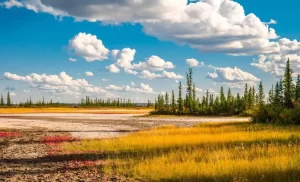
Wood Buffalo National Park, a UNESCO World Heritage Site, is Canada’s largest national park and a haven for wildlife enthusiasts, adventurers, and nature lovers. Covering over 44,000 square kilometers, this park is a pristine wilderness offering unparalleled opportunities to experience the beauty of the northern boreal forest and unique ecosystems.
Essential Information
- Location: Straddles the Northwest Territories and Alberta border. The nearest towns are Fort Smith (Northwest Territories) and Fort Chipewyan (Alberta).
- Size: The park is larger than Switzerland, making it one of the largest protected areas globally.
- Best Time to Visit:
- Summer (June–August): Ideal for hiking, wildlife viewing, and paddling.
- Winter (December–March): Offers opportunities for snowshoeing, cross-country skiing, and Northern Lights viewing.
Interesting Facts
- Whooping Cranes Sanctuary: The park is home to the last wild nesting grounds of the endangered whooping crane.
- Bison Population: Wood Buffalo supports the largest free-roaming herd of wood bison in the world.
- Dark Sky Preserve: It is one of the world’s largest dark sky preserves, perfect for stargazing and witnessing the Northern Lights.
- UNESCO Status: Recognized for its unique karst topography, salt plains, and diverse ecosystems.
How to Get There
- By Air:
- Fly to Fort Smith, Northwest Territories, from Edmonton or Yellowknife. Fort Smith is the primary gateway to the park.
- Flights to Fort Chipewyan, Alberta, are also available, though access to the park from there may require additional arrangements.
- By Road:
- Drive to Fort Smith via the Mackenzie Highway and Highway 5 from Alberta.
- A 7-hour drive from Yellowknife or 10-12 hours from Edmonton.
- Permits: Some activities, such as camping or guided tours, may require permits.
Best Things to Do
- Explore Salt Plains:
- Marvel at the expansive salt flats, a unique geological feature where bison often roam.
- Wildlife Viewing:
- Spot wood bison, whooping cranes, black bears, foxes, wolves, and an array of migratory birds.
- Canoeing on the Peace and Athabasca Rivers:
- Paddle along these historic waterways to experience the park’s beauty from a unique perspective.
- Hiking Trails:
- Salt River Trail System: Features routes of varying difficulty, showcasing the park’s diverse landscapes.
- Karstland Trails: Explore sinkholes, caves, and unique karst features.
- Stargazing and Aurora Watching:
- The dark sky preserve offers incredible opportunities to see constellations and the mesmerizing Northern Lights.
Best Accommodation Options
- Camping:
- Pine Lake Campground: Offers basic facilities, picnic areas, and a serene lakeside setting.
- Backcountry Camping: For adventurers, designated backcountry sites provide a true wilderness experience.
- Fort Smith Accommodations:
- Pelican Rapids Inn: A comfortable option with modern amenities.
- Wood Buffalo Inn: Budget-friendly with a rustic charm.
- Lodges:
- Fort Chipewyan and Fort Smith both have lodges that offer unique, cozy stays close to nature.
Good Attractions
- Pine Lake Recreation Area:
- Ideal for swimming, picnicking, and canoeing.
- Slave River Rapids:
- Located near Fort Smith, these rapids are famous for whitewater kayaking and wildlife watching.
- Buffalo Viewing Sites:
- Accessible by car, these areas offer a chance to see bison in their natural habitat.
- Whooping Crane Viewing:
- Join guided tours to see these rare birds in their nesting areas.
Getting Around
- By Car:
- A personal vehicle is the best way to explore the park, as there is no public transportation.
- By Bike:
- Biking is allowed on some trails, offering an eco-friendly way to get around.
- Guided Tours:
- Local guides provide access to remote areas and cultural insights.
Day Trips
- Slave River Rapids:
- Spend a day kayaking, hiking, or watching pelicans and other wildlife.
- Fort Chipewyan:
- A historic community with cultural landmarks and local Indigenous art.
- Salt Plains Excursion:
- Hike through these otherworldly landscapes to see unique flora and fauna.
Practical Tips
- Pack Essentials: Bring plenty of water, food, and first aid, as services are limited.
- Weather Preparedness: Dress in layers to adapt to rapidly changing weather conditions.
- Wildlife Safety: Learn how to handle wildlife encounters and carry bear spray if venturing into backcountry areas.
- Cultural Respect: The park has deep Indigenous significance. Be mindful of cultural heritage sites.
- Connectivity: Cell service is minimal; plan for offline navigation and emergency communication.
Conclusion
Wood Buffalo National Park is a pristine wilderness that captivates with its vast landscapes, unique ecosystems, and abundant wildlife. From paddling historic rivers to hiking the surreal salt plains, every experience in this park feels like an adventure into the untouched natural beauty of Canada’s north. Whether you’re stargazing in the dark sky preserve or observing majestic bison, your visit to Wood Buffalo will leave you with unforgettable memories. Plan ahead, embrace the solitude, and prepare for an extraordinary journey into nature’s grandeur!