
Everything you need to know for Belarus
Geographical Position and Climate of Belarus
Belarus is situated in Eastern Europe, bordered by Russia to the northeast, Ukraine to the south, Poland to the west, and Lithuania and Latvia to the northwest. Minsk is the capital and the largest city of Belarus.
The country is relatively flat with large tracts of marshy land. Forests cover a significant part of Belarus, and many rivers and streams crisscross the country, flowing generally northward into the Baltic Sea. The highest point is Dzyarzhynskaya Hara (Dzyarzhynsk Hill), reaching 345 meters above sea level.
Belarus has a continental climate characterized by cold winters and warm summers. Temperatures can drop below -20°C (-4°F) in the winter and rise above 30°C (86°F) in the summer. The country also receives moderate to heavy rainfall distributed fairly evenly throughout the year, although the late spring and early autumn tend to be particularly wet seasons. Snow cover lasts from late November or December until March.
Brief History of Belarus
Belarus has a rich history that dates back to the early medieval period. The region that is now Belarus was once part of the Grand Duchy of Lithuania, and later the Polish-Lithuanian Commonwealth. Throughout the centuries, it has been influenced by various cultures and powers.
In the late 18th century, as a result of the partitions of Poland, Belarus became part of the Russian Empire. Following the turmoil of World War I and the Russian Revolution, Belarus declared independence in 1918, forming the Belarusian People’s Republic. However, this independence was short-lived, as the country became a part of the Soviet Union in 1922.
During World War II, Belarus suffered significant devastation and a tremendous loss of life. Post-war, it was reconstructed under the Soviet socialist model.
With the decline of the Soviet Union, Belarus regained its independence on August 25, 1991. Since then, the country has maintained a presidential republic with Alexander Lukashenko serving as its president since 1994. Belarus’s political situation has been the subject of international scrutiny, particularly regarding human rights and democratic processes.
The country has also pursued economic reforms and has sought to improve its trade relations with other European countries and the rest of the world, although its economy remains closely linked to Russia.
Religion
Just over half the population in Belarus are Orthodox Christians. There are also minorities who are Roman Catholic, Muslim or Jewish. A very large proportion of the population are atheists.
Language
There are two official languages in the country : Russian and Belarusian. Other languages spoken on the territory of Belarus are Ukrainian and Polish.
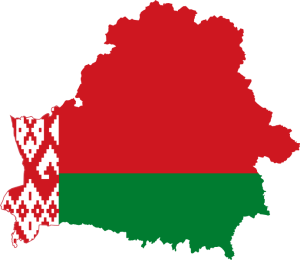
Belarus, an Eastern European nation, offers a mix of historical sites, cultural experiences, and natural landscapes. The capital city, Minsk, is known for its Soviet architecture, museums, and theaters. Key attractions include the Great Patriotic War Museum and Independence Square. Beyond the capital, travelers can visit UNESCO-listed castles like Mir and Nesvizh, and explore the Brest Fortress, a significant WWII landmark. Nature lovers can enjoy the ancient Belovezhskaya Pushcha National Park, home to the rare European bison.
Places You Must Visit In Belarus
Before You Visit Belarus
Travel to Belarus
Depending on where you are traveling from, there are a few different options for getting to Belarus:
By Air
- Minsk National Airport (MSQ) is the main international gateway for flights coming into Belarus.
- Major airlines that operate flights to Minsk include Belavia, Lufthansa, Aeroflot, Austrian Airlines, LOT Polish Airlines, and Turkish Airlines.
With Train
- There are regular train services connecting Belarus with neighboring countries such as Russia, Ukraine, Poland, Lithuania, and Latvia.
- The central railway station in Minsk offers direct international routes and can be a scenic way to travel.
By Road
- International bus services run to and from Minsk, connecting to major cities in Europe.
- If you’re driving, you can enter Belarus through one of the border crossings with Russia, Ukraine, Poland, Lithuania, or Latvia. Make sure to check visa requirements and border crossing procedures.
Visas for Belarus
isa requirements for Belarus vary depending on the nationality of the traveler, the purpose of the visit, and the length of stay. Here are some general guidelines:
- Visa-Free Entry: Citizens of certain countries can enter Belarus without a visa for a specified period. For instance, there is a 30-day visa-free entry available for visitors entering through Minsk National Airport, provided they are not arriving from or departing to a Russian airport.
- Short-Term Visas: For stays that do not qualify for visa-free entry, travelers will need to apply for a short-term visa, which allows them to stay in Belarus for up to 90 days within any given year.
- Long-Term Visas: Those planning to stay longer may apply for long-term visas, which are typically issued for employment, study, or residency purposes.
Best time to visit Belarus
The best time to visit Belarus largely depends on what you want to do and see during your trip. Here’s a seasonal breakdown to help you decide:
Spring (April to June):
- The weather is mild, and nature is in full bloom, making it a beautiful time for outdoor activities and sightseeing.
- May and June have longer daylight hours, which are ideal for exploring the country.
Summer (June to August):
- Warmest months with temperatures ranging from 20°C to 30°C (68°F to 86°F), perfect for enjoying the many lakes and forests.
- It’s the peak tourist season, so expect more crowds at popular attractions.
- A great time for cultural festivals and events.
Autumn (September to November):
- Cooler temperatures and the changing colors of the foliage create a picturesque setting, especially in the countryside.
- Fewer tourists result in a more relaxed atmosphere.
- Early autumn still has pleasant weather for outdoor activities before it gets too cold.
Winter (December to February):
- Cold and snowy, with temperatures often below freezing, which can be ideal for winter sports enthusiasts.
- Christmas and New Year festivities offer unique cultural experiences.
- Days are shorter and darker, which might limit sightseeing opportunities.
Generally, late spring to early autumn (May to September) is considered the best time to visit Belarus for favorable weather and accessibility to most attractions. However, if you’re interested in winter sports or want to experience the snowy landscape, winter could be the perfect time for you. Always check the current weather conditions and event schedules when planning your trip to ensure the best possible experience.
Important Information:
Capital – Minsk
Territory – 207,595 km2
Currency – Belarusian ruble
Time Zone – UTC+3 (MSK)
Population – 9,255,524
Demonym – Belarusian