
Everything you need to know for Canada
Geographical position and Climate of Canada
Canada is located in the northern part of North America, extending from the Atlantic Ocean in the east to the Pacific Ocean in the west, and northward into the Arctic Ocean. It shares the world’s longest land border with the United States to the south and northwest (Alaska). The country spans six time zones and encompasses a variety of landscapes including vast mountain ranges, plains, forests, and thousands of lakes and rivers.
The climate of Canada is as varied as its geography, ranging from the permanent ice caps of the High Arctic to the temperate rainforests of British Columbia’s coast. Overall, Canada’s climate is influenced by factors such as latitude, terrain, ocean currents, and prevailing winds, resulting in significant weather variations across the country. It’s important for visitors to check local weather conditions and prepare accordingly, as temperatures can range from above 30°C (86°F) in summer to below -40°C (-40°F) in winter in some areas.
Brief History of Canada
Canada’s history is marked by the diverse cultures and peoples that have shaped its identity. Indigenous peoples, including First Nations, Inuit, and Métis, have inhabited the land for thousands of years with rich and varied cultures.
European exploration began in the 15th century with Norse explorers followed by John Cabot in 1497. The French established the first permanent European settlement at Port Royal in 1605 and founded Quebec City in 1608. New France grew until it was ceded to Britain in 1763 after the Seven Years’ War.
The late 18th and early 19th centuries saw an influx of Loyalists from the United States and increased settlement. The Act of Union in 1840 united Upper and Lower Canada into the Province of Canada, paving the way for confederation.
On July 1, 1867, the British North America Act united Ontario, Quebec, Nova Scotia, and New Brunswick into the Dominion of Canada, a self-governing entity within the British Empire. Other provinces and territories joined over time, with Newfoundland being the last to join in 1949.
The 20th century saw Canada’s growth as an independent nation, participating in both World Wars and gaining full autonomy from Britain with the Statute of Westminster in 1931 and the patriation of the Constitution in 1982.
Today, Canada is known for its multicultural society, bilingual heritage, and as a country with a strong international presence and commitment to peacekeeping and global cooperation.
Religion of Canada
Christianity is the predominant religion in Canada, with Roman Catholics forming the largest Christian group, followed by various Protestant denominations, including the United Church of Canada, Anglicans, Baptists, and Lutherans.
In addition to Christianity, there is a significant presence of other religions due to immigration patterns. These include Islam, Hinduism, Sikhism, Buddhism, Judaism, and Eastern Orthodox Christianity. Each of these religious communities contributes to the cultural fabric of Canadian society through festivals, foods, and traditions.
Language of Canada
Canada is officially bilingual, with English and French recognized as the official languages at the federal level. This reflects the country’s history and the significant presence of both Anglophone and Francophone communities.
English is the most widely spoken language across most of Canada, serving as the primary language of communication in all provinces and territories except Quebec.
French is predominantly spoken in Quebec, where it is the official language of the province. It is also widely used in parts of New Brunswick and some areas of Ontario, Manitoba, and other regions with Francophone populations.
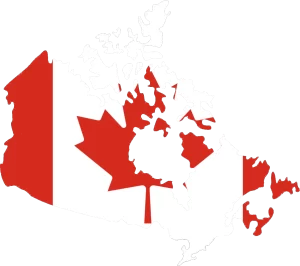
Canadian Provinces and Territories you can find in this site
- Ontario
- Quebec
- Nova Scotia
- New Brunswick
- Manitoba
- British Columbia
- Prince Edward Island
- Saskatchewan
- Alberta
- Newfoundland and Labrador
- Yukon
- Northwest Territories
- Nunavut
Before you visit Canada
Travel to Canada
By Air:
- Canada has numerous international airports across the country, with major hubs including Toronto Pearson International Airport (YYZ), Vancouver International Airport (YVR), Montreal-Pierre Elliott Trudeau International Airport (YUL), and Calgary International Airport (YYC).
- Major airlines from all continents operate flights to Canada, providing direct or connecting services.
With car or bus:
- From the United States: There are multiple land border crossings between Canada and the United States. The most frequently used crossings are in Ontario, Quebec, British Columbia, and Alberta.
- Travelers can drive across the border or take buses operated by companies like Greyhound.
By Sea:
- Cruise Ships: Various cruise lines offer routes that include Canadian destinations, particularly along the east coast (Atlantic Canada) and west coast (British Columbia).
- Ferries: There are ferry services from the United States to Canada, including routes from Washington State to British Columbia and from Maine to Nova Scotia.
Visas for Canada
Visitor Visa (Temporary Resident Visa):
- Travelers from countries that are not visa-exempt must apply for a Visitor Visa to enter Canada for tourism, family visits, or business.
- The application can be completed online or at a Canadian visa office.
Electronic Travel Authorization (eTA):
- Visa-exempt foreign nationals, except United States citizens, require an eTA to fly to or transit through a Canadian airport.
- An eTA is electronically linked to your passport and is valid for up to five years or until your passport expires, whichever comes first.
Study and Work Visas:
- Those planning to study or work in Canada will need to apply for the appropriate permits.
- A study permit is required for most international students, while a work permit is needed for most foreign workers.
Other Visas and Permits:
- There are various other types of visas and permits for specific situations, such as the Super Visa for parents and grandparents of Canadian citizens or permanent residents, which allows for longer visits.
General Requirements:
- Applicants typically need to provide personal information, travel details, fingerprints, photos, and pay a processing fee.
- You may also need to undergo a medical exam and/or provide a letter of invitation from someone living in Canada.
Best time to visit Canada
The best time to visit Canada depends on the activities you’re interested in and the regions you plan to explore:
Summer (June to August):
- Ideal for outdoor activities like hiking, wildlife viewing, and exploring national parks.
- Warm weather makes it perfect for city tours and festivals.
- Peak tourist season, especially in popular destinations like Banff and Vancouver.
Fall (September to November):
- Cooler temperatures and fall foliage, particularly beautiful in Ontario and Quebec.
- Fewer tourists and lower prices than summer.
- Great time for wine tours in regions like the Okanagan Valley or Niagara Peninsula.
Winter (December to February):
- Best time for winter sports such as skiing, snowboarding, and ice skating. Prime destinations include Whistler, Banff, and Mont-Tremblant.
- Opportunities to see the Northern Lights, especially in northern regions like Yukon.
- Cold weather can be challenging but also offers unique experiences like Quebec City’s Winter Carnival.
Spring (March to May):
- A transition period with milder weather and fewer crowds.
- Ideal for witnessing the spring bloom, particularly in cities like Victoria with its famous Butchart Gardens.
- Some ski resorts remain open until late spring.
Important Information
Capital – Ottawa
Territory – 9,984,670 km2
Currency – Canadian dollar (CAD)
Time Zone – UTC-3.5 to -8
Population – 40,769,890
Demonym – Canadian