
Everything you need to know for Montenegro
Geographical position and Climate of Montenegro
Montenegro is situated in Southeastern Europe on the Balkan Peninsula, bordered by Croatia to the west, Bosnia and Herzegovina to the northwest, Serbia to the northeast, Kosovo to the east, and Albania to the southeast. It has a narrow coastal plain along its Adriatic coastline.
Montenegro’s climate varies significantly throughout the region. The coast enjoys a Mediterranean climate with hot, dry summers and mild, wet winters. As one moves inland, the climate transitions to a more continental type, with colder winters and hotter summers. Mountainous regions experience a subalpine climate with cooler temperatures and more precipitation.
Brief History of Montenegro
Montenegro’s history is rich and complex, marked by various periods of rule and influence. The area now known as Montenegro was inhabited by the Illyrians and Romans before falling under Byzantine control. In the Middle Ages, it emerged as a distinct entity known as the Principality of Zeta.
During the Ottoman Empire’s expansion, Montenegro retained a degree of autonomy before becoming a recognized independent principality in the 19th century. Following the Balkan Wars and World War I, Montenegro was absorbed into the Kingdom of Serbs, Croats, and Slovenes, later known as Yugoslavia.
After World War II, Montenegro became one of the six republics within the Socialist Federal Republic of Yugoslavia under Josip Broz Tito. With the disintegration of Yugoslavia in the 1990s, Montenegro formed a federation with Serbia, which eventually dissolved, leading to Montenegro’s referendum on independence in 2006. Montenegro has since been an independent sovereign state.
Religion of Montenegro
The majority of the population in Montenegro are Orthodox Christians. There is also a Muslim minority and a Roman Catholic minority.
Language of Montenegro
The country’s official language is Montenegrin, which can be written in Latin or Cyrillic script. There is also an Albanian minority that speaks Albanian.
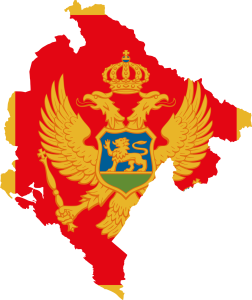
Montenegro is a small but stunningly diverse country that has become an increasingly popular tourist destination. Its tourism offerings range from the sun-soaked beaches of the Adriatic coast to the rugged mountains in the north. The Bay of Kotor, resembling a fjord, is dotted with historic towns and is a UNESCO World Heritage site. The coastal town of Budva is known for its medieval old town, sandy beaches, and vibrant nightlife.
Inland, visitors can explore the Durmitor National Park, a haven for hikers, rafters, and nature enthusiasts, featuring the Tara River Canyon, one of the deepest river canyons in Europe. Montenegro’s mild Mediterranean climate, scenic beauty, and rich history provide a unique blend of natural and cultural attractions, catering to tourists of all preferences.
Places You Must Visit In Montenegro
Before you visit Montenegro
Travel to Montenegro
By Air
The country has two main international airports:
- Podgorica Airport (TGD), near the capital city.
- Tivat Airport (TIV), which is closer to the coastal towns.
During the summer months, there are more frequent flights, including low-cost carriers from major cities in Europe.
By Road
Montenegro is connected by road to neighboring countries. You can enter via Croatia, Bosnia and Herzegovina, Serbia, Kosovo, and Albania. The roads offer scenic views, especially along the coast.
By Sea
The port of Bar is the main seaport and allows for ferry connections from Italy. Kotor and Budva also welcome cruise ships throughout the year.
By Rail
There’s a train line connecting Montenegro with Serbia, providing a scenic route through the mountains, particularly the route from Belgrade to Bar.
Visas for Montenegro
For EU Citizens
- EU citizens do not require a visa to enter Montenegro. They can stay for up to 90 days with a valid ID card or passport.
For Non-EU Citizens
- Many non-EU citizens, including those from the United States, Canada, Australia, and Russia, can enter Montenegro without a visa for stays of up to 90 days within a 180-day period.
- Citizens of countries that do not have a visa-free arrangement with Montenegro must apply for a visa before arrival.
Visa Application Process
- The application process typically involves submitting a visa application form, passport-sized photos, a valid passport, proof of travel insurance, accommodation booking, return tickets, and proof of sufficient funds for the stay.
Best time to visit Montenegro
For Coastal Areas
- Summer (June to August): Ideal for beachgoers and those looking to enjoy the seaside. The weather is warm and sunny, perfect for swimming and sunbathing.
- Shoulder Seasons (May and September to October): These months offer milder temperatures, fewer crowds, and lower prices while still providing plenty of opportunities to enjoy outdoor activities.
For Mountain Regions
- Summer (June to August): This is also the best time for hiking, mountain biking, and other outdoor adventures in the northern highlands, as the snow has melted and the trails are accessible.
- Winter (December to March): Winter sports enthusiasts will find this period ideal for skiing and snowboarding, especially in resorts like Kolašin and Žabljak.
Important Information
Capital – Podgorica
Territory – 13,812 km2
Currency – Euro
Time zone – UTC+1 (CET) / UTC+2 (CEST)
Population – 633,158
Demonym – Montenegrin