
Everything you need to know for Poland
Geographical Position and Climate of Poland
Poland is located in Central Europe, bordered by Germany to the west; the Czech Republic and Slovakia to the south; Ukraine, Belarus, and Lithuania to the east; and the Baltic Sea and Kaliningrad Oblast, a Russian exclave, to the north.
Poland has a temperate seasonal climate characterized by both maritime and continental elements. This means that the weather can vary significantly from summer to winter.
Brief History of Poland
The history of Poland is rooted in the early migrations of Slavs, who established permanent settlements in the Polish lands during the early Middle Ages. The first historically recorded ruler of Poland, Duke Mieszko I, adopted Christianity under the auspices of the Latin Church in AD 966, which marked the beginning of the state of Poland and its integration into European culture.
Following this significant event, Poland was ruled by a series of kings and queens from various dynasties, leading to strong medieval monarchy. However, the Golden Age of the country was during the Jagiellonian dynasty in the 15th and 16th centuries. This period saw Poland forming a commonwealth with Lithuania in 1569, known as the Polish-Lithuanian Commonwealth, becoming one of the largest and most populous nations of 16th- and 17th-century Europe, with a unique system of noble democracy.
The late 18th century brought severe internal problems and, following a series of partitions by its neighbors (Russia, Prussia, and Austria), Poland ceased to exist as an independent nation for 123 years.
After World War I, Poland regained its independence in 1918 with the Treaty of Versailles but was quickly embroiled in conflicts such as the Polish-Soviet War. The interwar period was a time of cultural growth but also rising tensions that culminated in the invasion by Germany and the Soviet Union at the start of World War II.
Post-war Poland found itself within the Soviet sphere of influence, leading to the establishment of a communist government. This period witnessed periodic uprisings and significant emigration. Eventually, the solidarity movement under Lech Wałęsa played a crucial role in the peaceful transition to democracy in 1989, which led to the fall of the Iron Curtain.
Since joining NATO in 1999 and the European Union in 2004, Poland has been developing as a market economy and growing political entity within Europe. Its rich history of resilience and endurance makes Poland a pivotal nation in the story of Europe.
Religion
A very large part of the population professes Roman Catholic Christianity. There are minorities who are Orthodox Christians and Jews.
Language
The official language is Polish. Other spoken languages are English, German and French.
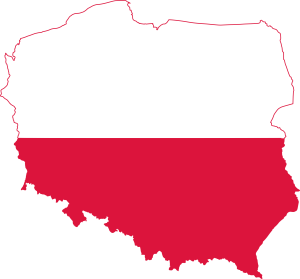
Poland is a country rich in history, culture, and natural beauty, making it an increasingly popular destination for tourists from around the world. Visitors are drawn to its picturesque medieval towns, majestic castles, and diverse landscapes that range from the sandy beaches of the Baltic Sea to the rugged peaks of the Tatra Mountains.
Places You Must Visit In Poland
Before you visit Poland
Travel to Poland
Traveling to Poland is convenient and accessible due to its central location in Europe. Visitors can arrive by various modes of transportation, including air, train, road, or sea.
By Air: The most common way to reach Poland is by air, with the Warsaw Chopin Airport being the largest and most international airport in the country. Other major airports include John Paul II International Airport Kraków-Balice, Gdańsk Lech Wałęsa Airport, and Wrocław–Copernicus Airport, among others. These airports serve numerous international and domestic flights, connecting Poland with cities across Europe and the world.
By Train: Poland has an extensive railway network that connects it with other European countries. International trains run from various European cities to Polish cities like Warsaw, Kraków, and Poznań, making it a scenic and efficient option for travelers coming from or through other parts of Europe.
By Road: Poland is well-connected by roads and highways, and entering by car or bus is a viable option. International bus services operate between Poland and many European countries, offering an economical way to travel.
By Sea: For those coming from Scandinavia and other Baltic regions, ferry services are available to the Polish ports of Gdańsk, Gdynia, and Świnoujście.
Visas for Poland
Poland is a member of the European Union and part of the Schengen Area, which means that visa policies for Poland are largely aligned with those of other Schengen countries. Here’s a brief overview of visa requirements:
For EU/EEA/Swiss Citizens:
- No visa is required for citizens of EU, EEA countries, and Switzerland.
- They can enter, stay, and work in Poland using their national ID card or passport.
For Non-EU/EEA/Swiss Citizens:
- Citizens of many countries, including the United States, Canada, Australia, Japan, South Korea, and Brazil, do not need a visa for short stays (up to 90 days within a 180-day period) for tourism, business, or family visits.
- Citizens from countries that do not have a visa waiver agreement with the Schengen states must apply for a Schengen visa, which allows travel within the Schengen Area.
- For longer stays or purposes such as work or study, a national visa (D-type) is required, which must be applied for at a Polish consulate or embassy prior to arrival.
Best time to visit Poland
The best time to visit Poland largely depends on what you want to do during your trip. Here’s a seasonal guide to help you decide:
Spring (March to May):
- The weather starts to warm up, and the landscape comes alive with blooming flowers.
- It’s an excellent time for city tours and outdoor activities without the summer crowds.
Summer (June to August):
- The peak tourist season, offering the warmest weather, ideal for beach holidays on the Baltic coast and hiking in the mountains.
- Cultural festivals and open-air events are plentiful during this time.
Autumn (September to November):
- A beautiful season with colorful foliage, especially in the many parks and forests.
- Cooler temperatures are perfect for sightseeing and enjoying the fall harvest, including traditional food festivals.
Winter (December to February):
- Ideal for winter sports enthusiasts, with snow-covered mountains offering skiing opportunities.
- Christmas markets and festivities make for a magical holiday experience in cities like Warsaw and Kraków.
Important Information
Capital – Warsaw
Territory – 312,696 km2
Currency – Zloty
Time zone – UTC+1 (CET) / UTC+2 (CEST)
Population – 38,036,118
Demonym – Polish