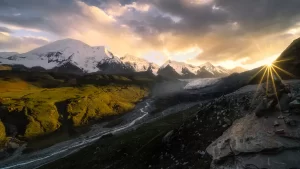
Essential Information About Sanjiangyuan National Nature Reserve
Sanjiangyuan National Nature Reserve, known as the “Source of Three Rivers,” is one of China’s most ecologically significant and breathtaking destinations. Located in Qinghai Province on the Tibetan Plateau, it is the headwaters of the Yangtze, Yellow, and Mekong Rivers. Covering over 363,000 square kilometers, it is the largest nature reserve in China and a haven for rare wildlife, including snow leopards, Tibetan antelopes, and wild yaks.
- Location: Southern Qinghai Province, Tibetan Plateau
- Altitude: 3,500 to 6,200 meters above sea level
- Climate: Cold and dry with harsh winters, best visited from June to September
- Famous for: Pristine landscapes, rare wildlife, Tibetan nomadic culture, and the sources of China’s three great rivers
Interesting Facts About Sanjiangyuan
- Largest Wetland Ecosystem in China – Sanjiangyuan protects vast grasslands, glaciers, and wetlands that regulate water flow to millions of people downstream.
- Tibetan Nomadic Culture – The region is home to traditional Tibetan herders who maintain their ancient way of life.
- Snow Leopard Capital of the World – The reserve is one of the best places to spot snow leopards in the wild.
- Oxygen Levels Are Low – The high-altitude environment has 50% less oxygen than at sea level.
- One of the Most Remote Places in China – The reserve is rarely visited by tourists, making it a true off-the-beaten-path adventure.
How to Get to Sanjiangyuan National Nature Reserve
By Air
- The nearest airport is Yushu Batang Airport (YUS), serving Yushu Tibetan Autonomous Prefecture.
- Flights available from Xining, Chengdu, and Lhasa.
- From Yushu, travel by SUV or off-road vehicle into the reserve.
With Train
- The closest railway station is in Xining, which connects to Beijing, Xi’an, Chengdu, and Lhasa via the Qinghai-Tibet Railway.
- From Xining, take a bus or chartered vehicle to Yushu and deeper into the reserve.
By Road
- From Xining: Drive 800 km to Yushu (about 10-12 hours).
- From Chengdu: Drive 1,600 km through the Sichuan-Tibet Highway, an epic road trip.
- Due to rough terrain, a 4WD vehicle is strongly recommended.
Best Things to Do in Sanjiangyuan National Nature Reserve
1. Visit the Source of the Yangtze River
- Trek to Jari Hill, the official starting point of the Yangtze River.
- Witness glaciers melting into the river’s first streams.
2. Explore Hoh Xil (Kekexili) Nature Reserve
- A UNESCO World Heritage Site and one of China’s last wilderness areas.
- Spot Tibetan antelopes (chiru), wild yaks, and wolves.
- Strictly protected—entry is possible only with special permits.
3. Discover the Source of the Yellow River
- Located near Madoi County, this is where China’s “Mother River” begins.
- Trek across wetlands, glaciers, and highland meadows.
4. Wildlife Watching in the Reserve
- Look for snow leopards, brown bears, Tibetan foxes, and black-necked cranes.
- Best time for wildlife sightings: Autumn (September–November).
5. Experience Tibetan Nomadic Culture
- Stay in traditional Tibetan tents (yurts) and experience herding culture.
- Enjoy butter tea, yak milk, and traditional Tibetan dances.
Best Accommodation Near Sanjiangyuan
Luxury Hotels
- Yushu Gesar Palace Hotel – Best option in Yushu with Tibetan-style luxury rooms.
Mid-Range Hotels & Guesthouses
- Madoi Tibetan Homestays – Experience authentic Tibetan hospitality.
- Qumalai County Hotels – Basic but comfortable lodging for travelers exploring deeper areas.
Budget Accommodations
- Nomadic Tent Stays – Stay in Tibetan yak-hair tents with local families.
- Camping – The best way to experience Sanjiangyuan’s untouched wilderness.
Top Attractions Near Sanjiangyuan
1. The Tongtian River Canyon
- A dramatic gorge carved by the upper Yangtze River.
- Offers stunning rock formations, waterfalls, and hiking trails.
2. Zhaling & Eling Lakes
- The largest freshwater lakes in the Yellow River Basin.
- Known as the “Sacred Eyes of the Plateau.”
3. Gyanak Mani Stone Field
- One of the largest collections of Tibetan prayer stones (mani stones).
- Pilgrims leave prayers and inscriptions for good fortune.
Getting Around Sanjiangyuan
🚗 4WD Vehicles & SUVs – The best way to explore rugged terrain.
🐴 Horseback Riding – Available in Tibetan villages for short trips.
🚶♂️ Trekking – Many areas are accessible only by foot due to environmental protection laws.
Day Trips from Sanjiangyuan
1. Yushu Tibetan Autonomous Prefecture (2-3 Hours from Sanjiangyuan)
- Visit the Princess Wencheng Temple, an ancient Buddhist site.
- Explore Lebagou Canyon, a hidden gem for hiking.
2. Qinghai Lake (6-7 Hours from Sanjiangyuan)
- A stunning high-altitude saltwater lake with birdwatching, cycling, and Tibetan culture.
3. Golmud & the Kunlun Mountains (8-10 Hours from Sanjiangyuan)
- Drive through the Kunlun Pass and see glaciers and wildlife.
- Experience the desolate beauty of China’s high-altitude wilderness.
Practical Tips for Visiting Sanjiangyuan
Prepare for High Altitude – Acclimate in Xining or Yushu before heading into the reserve.
Dress in Layers – Temperatures drop below freezing, even in summer.
Bring a Satellite Phone – No mobile coverage in remote areas.
Respect Local Customs – Tibetan prayers, monasteries, and wildlife are highly revered.
Pack Essentials – Food, water, oxygen tanks, and first aid kits are a must.
Conclusion
Sanjiangyuan National Nature Reserve is one of China’s most breathtaking and untouched wilderness areas. With its spectacular landscapes, rare wildlife, and deep Tibetan cultural heritage, it offers a once-in-a-lifetime adventure for nature lovers and explorers. If you’re looking for an off-the-grid experience in one of the world’s most pristine environments, Sanjiangyuan should be at the top of your list!
🚀 Plan your trip today and experience the heart of the Tibetan Plateau!